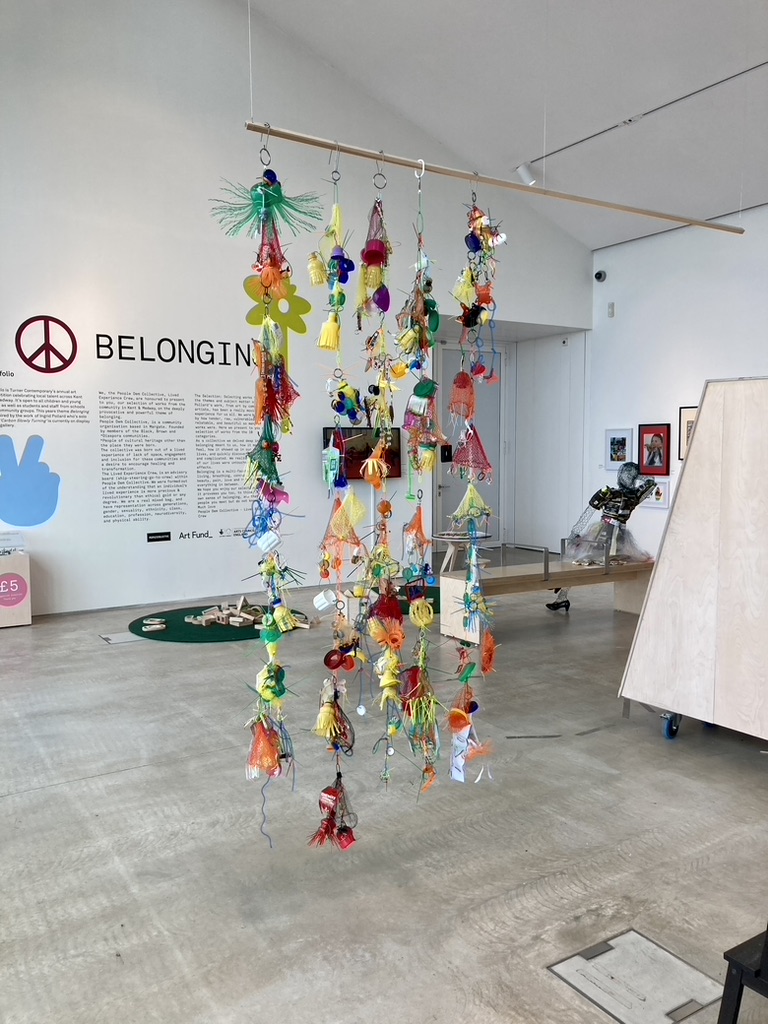
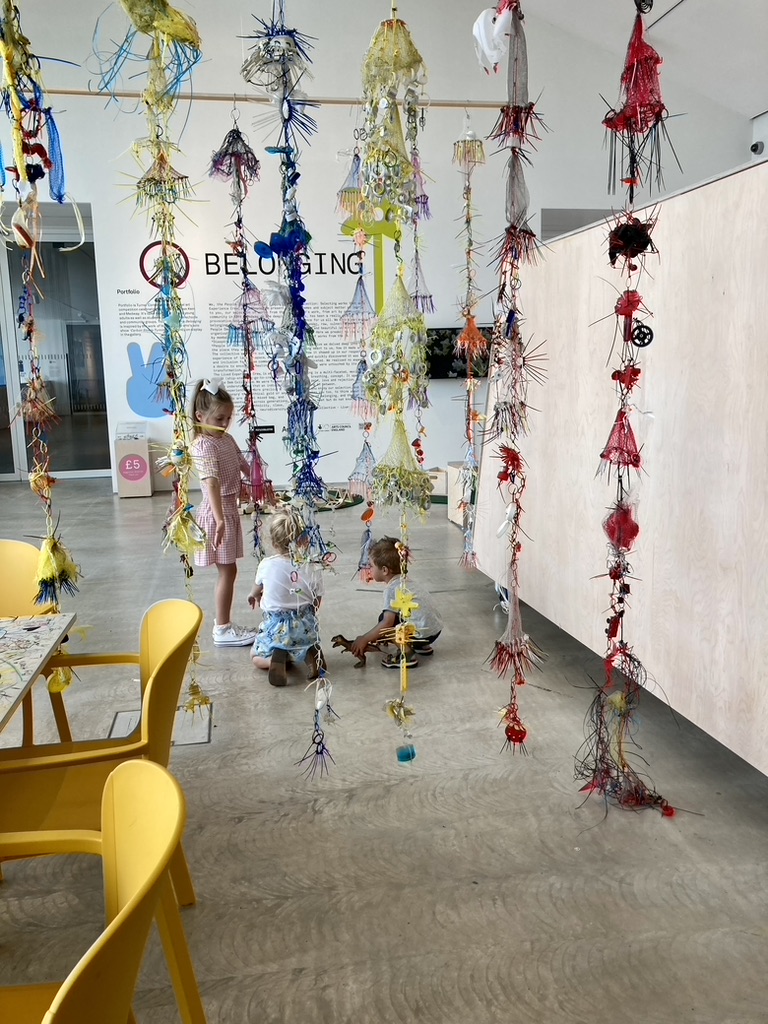
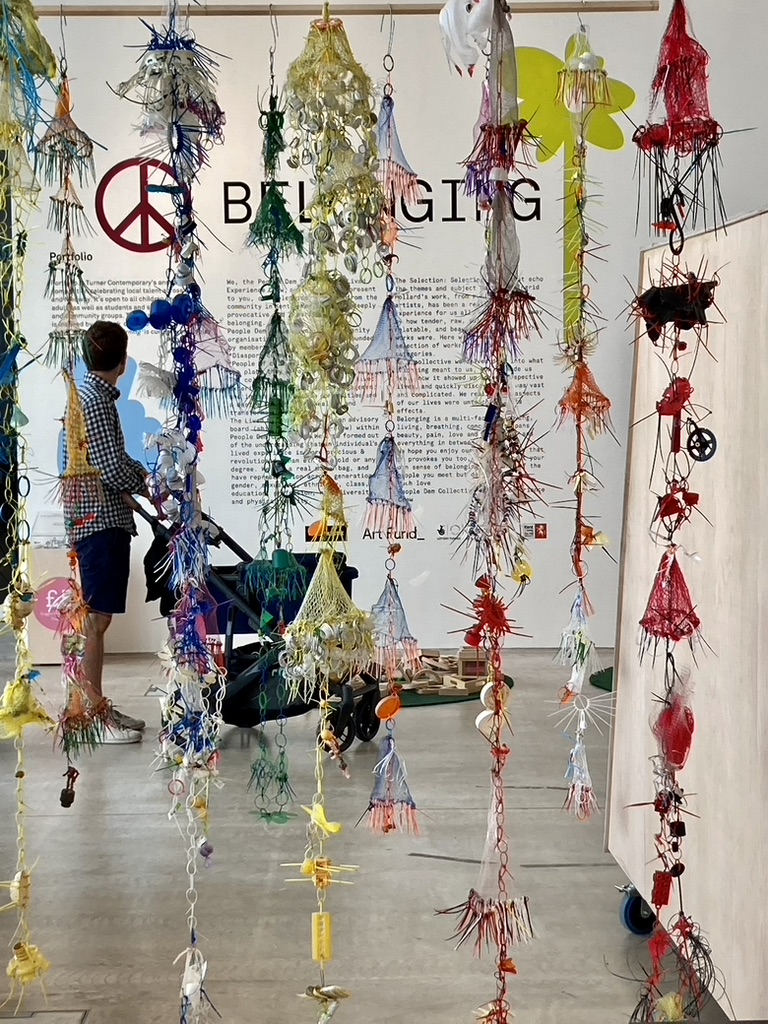
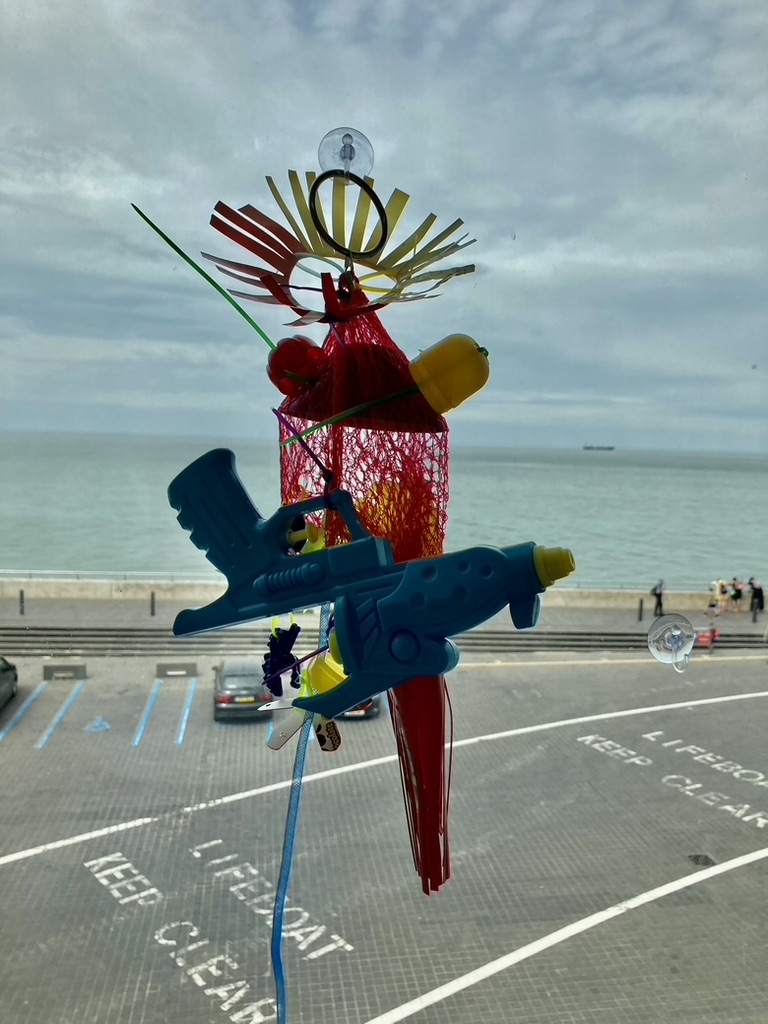
Curated works made from reused single-use plastics by Dr Katarina Dimitrijevic, aka KraalD.
2015 – 2025 KraalD Curated Works
We live in an era of plastic debris. From an individual perspective, it is challenging to perceive the extent of plastic pollution due to its proximity, planetary entanglement, and the multiplicities of scale.
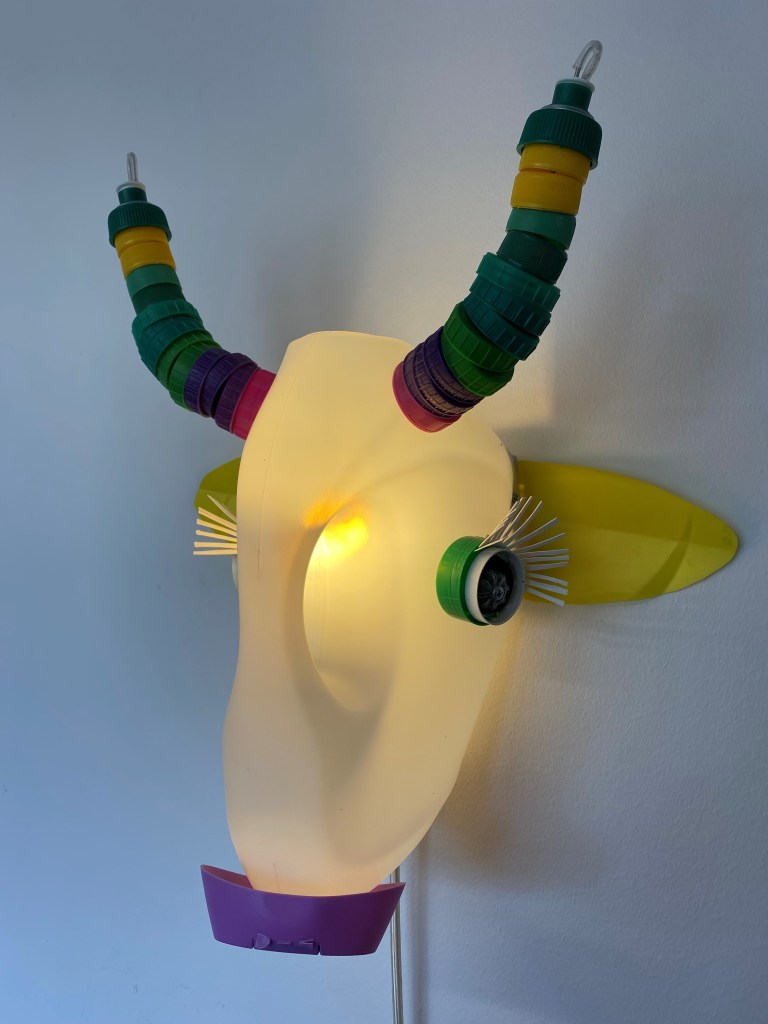
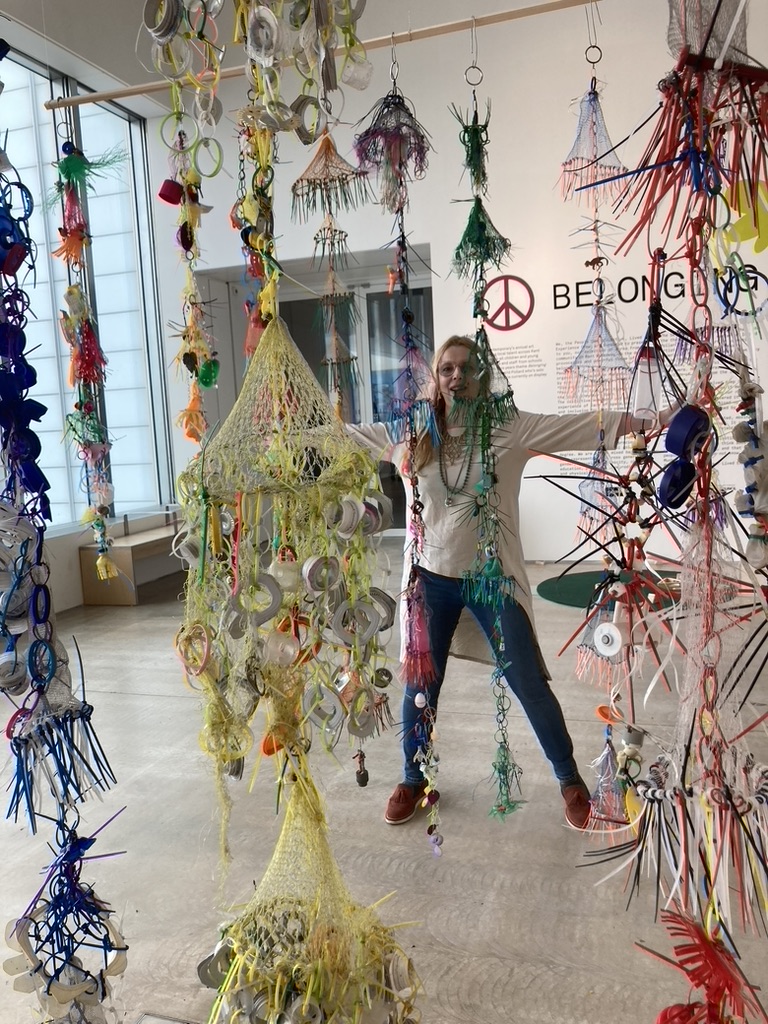
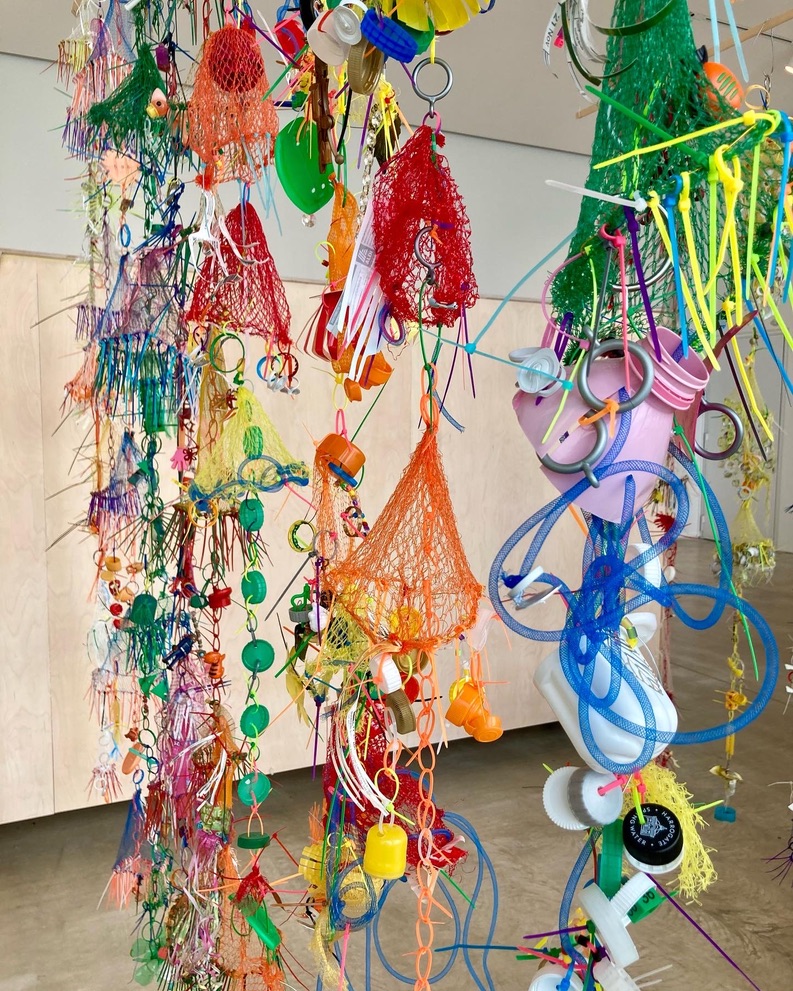
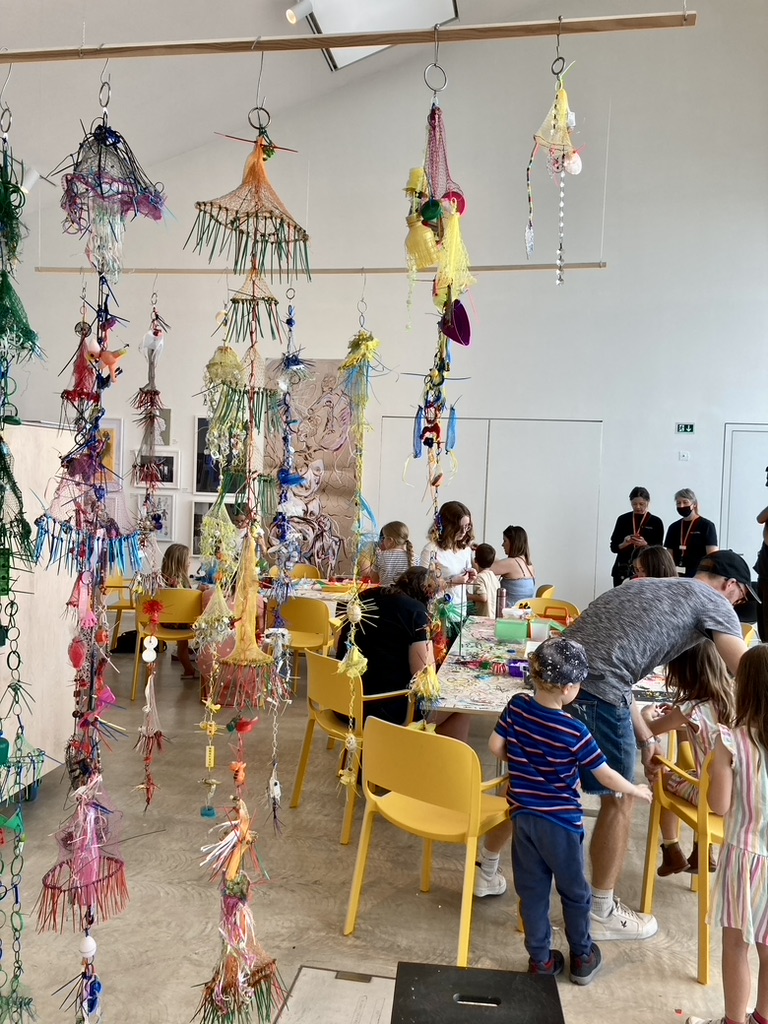
The curated installations in this exhibition narrate the social and material transformation of plastic waste. A novel, aesthetically positive waste design language supports change in material values and disposal rituals through maintenance art and hands-on reuse tactics with single-use plastic packaging.
KraalD’s hands-on exploration of designing with plastic waste promotes the reuse of single-use plastics. The exhibition promotes waste and environmental awareness, generating concepts and future(s) that convey new materiality perspectives and egalitarian planetary worldviews.
Dr Katarina Dimitrijevic’s research is situated in practice, drawing on interdisciplinary art-design, discard studies, feminist materiality, and environmental science. Through speculative design with plastic waste agency, KraalDesignedisposal (KraalD), UK-based praxis, intervenes to build positive relations with plastic waste, visualising plastic pollution and entanglement of mismanaged plastic waste in nature.
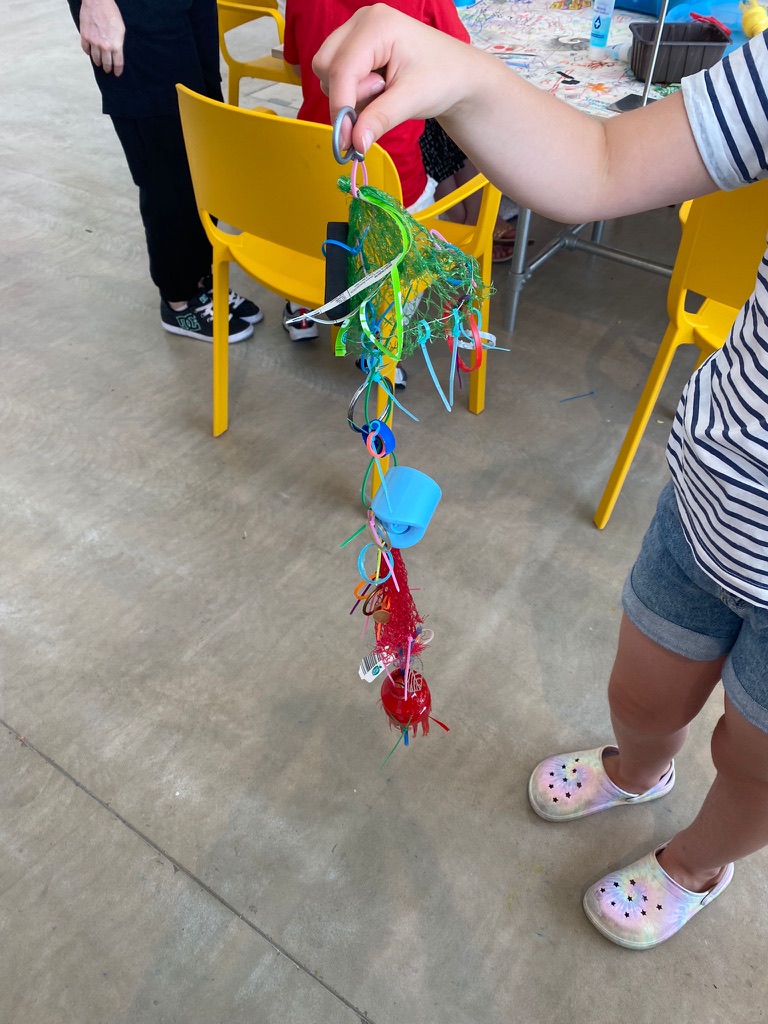
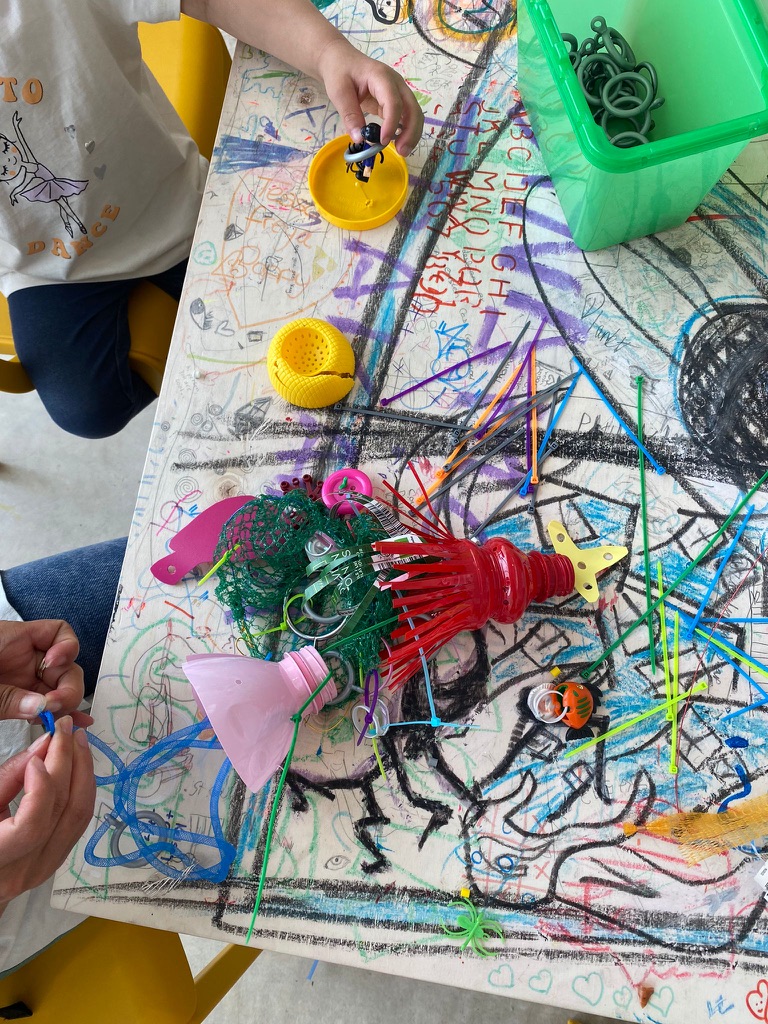
The exhibition is open to all visitors, inviting them to co-design and contribute to the interactive exhibits.
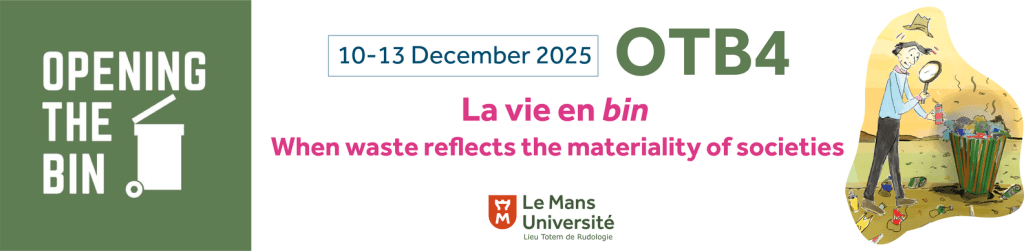
We are pleased to announce the call for abstracts for the “Opening the Bin 4: La Vie en Bin” conference, scheduled to take place in December 2025 in France.
We invite you to submit your abstract proposals by the deadline of March 31, 2025.
OTB 4 conference presents a valuable opportunity to unite the European and international humanities and social science research communities focused on waste.
Following successful events in Sweden and the UK, we look forward to this fourth edition.
Please feel free to share this call for papers widely.
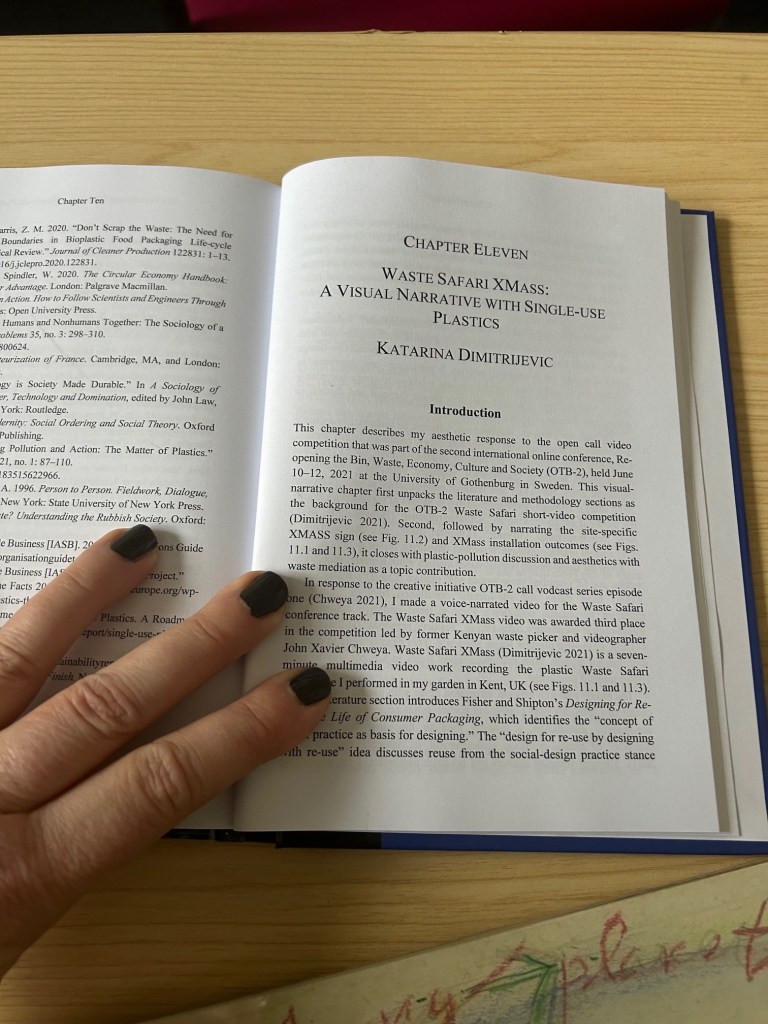
The second OTB book, Waste Research from the Social Sciences and Humanities Perspectives: Reopening the Bin, is available, to which I contributed a chapter in the Waste Practices Section, “Waste Safari XMass: A Visual Narrative with Single-use Plastics”.
This book brings together diverse international scholars who interrogate waste from a myriad of disciplines within the social sciences and humanities. These disciplines explore the many faces and dimensions of waste, adding new understandings of common and hidden waste-related problems. These insider perspectives and reflections offer innovative ways of addressing waste-related dilemmas by highlighting solutions and proposing new approaches.
I agree that we are biased with Alison Stowell, co-editor, but it is a great read. There are many exciting chapters covered in three sections: Waste Communities, Waste Policy and Governance, and Waste Practices.
I look forward to reading all the contributors’ chapters over the festive season! I thoroughly enjoyed Marta Ferrie’s Chapter Ten, “The Morality and Discipline of Single-Use Plastics.”
In collaboration with the Loughborough University @Loughborough Wellbeing Centre team, we will be offering a free DIY Christmas Decoration workshop on Monday, 9th December 2024, from 10 am to 1pm.
This workshop is open to all and will be run by Katarina Dimitrijevic from KraalD, who researches plastic pollution and promotes reuse through participatory craft-making!
Come along and make some DIY decorations for your tree. Our cafe will be open all morning, and you are welcome to join our Wellbeing Cafe, too!
Looking forward to making DIY Christmas decorations together from post-consumer single-use plastics. All DIY materials provided are washed and sterilised.
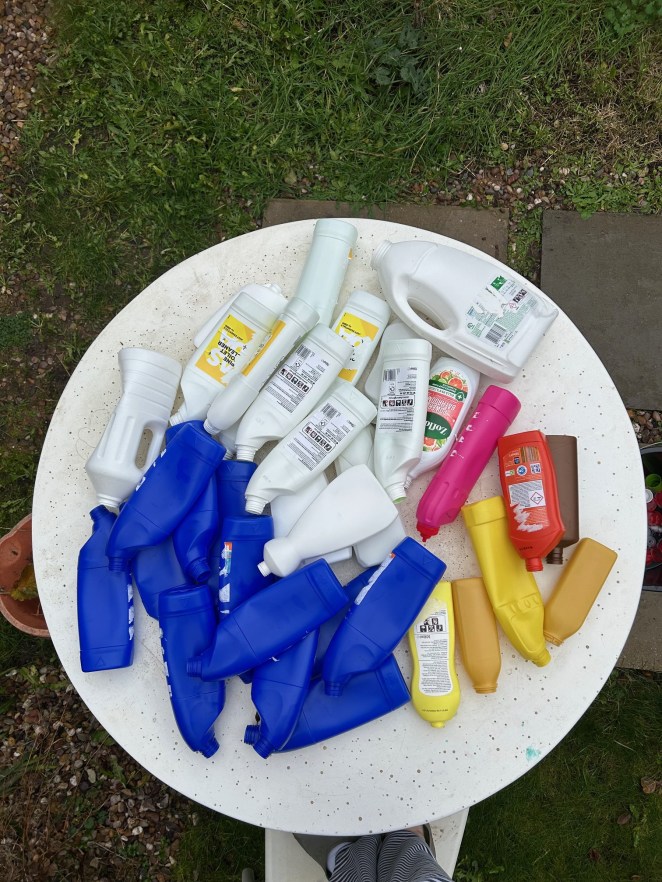
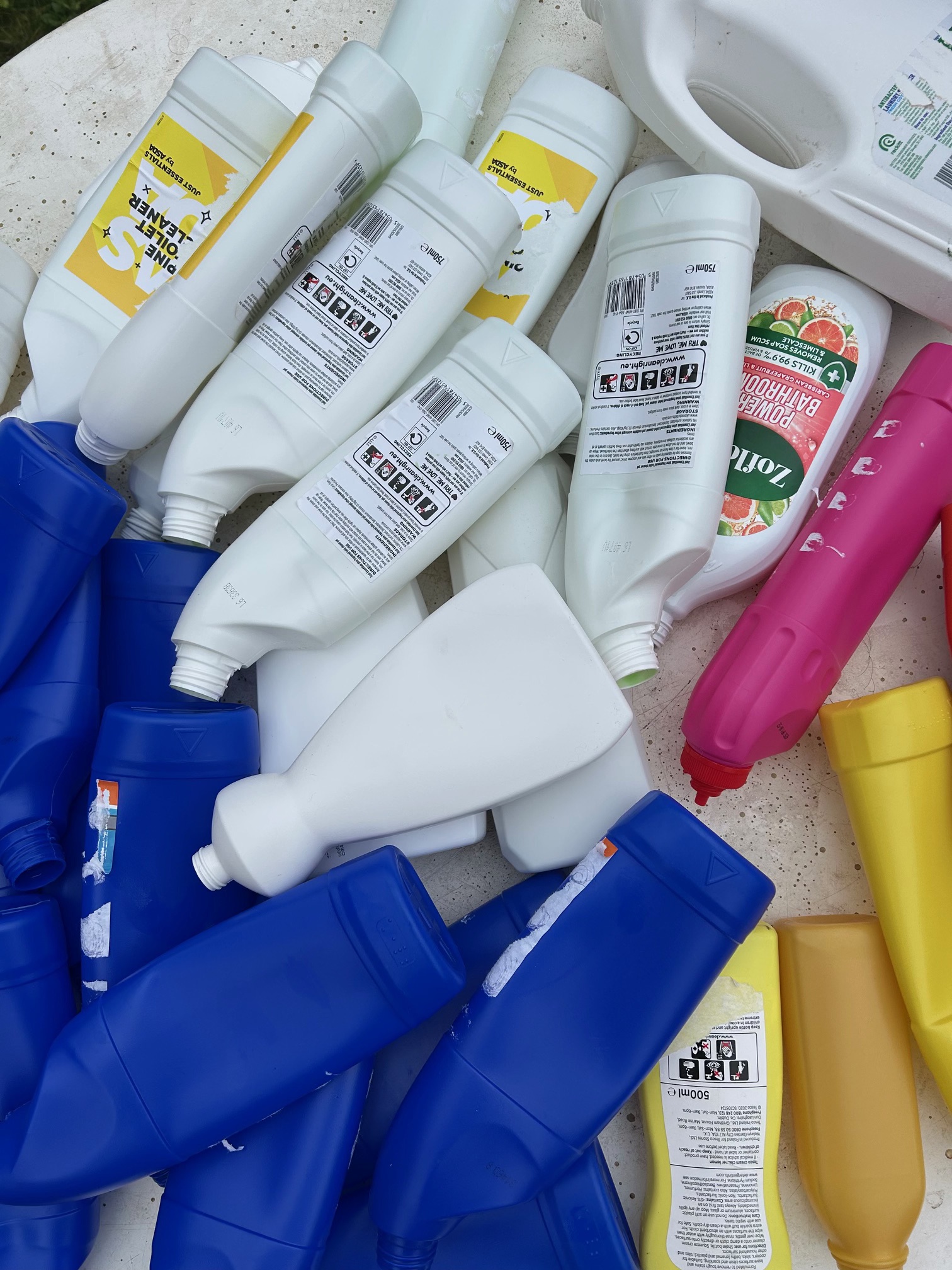
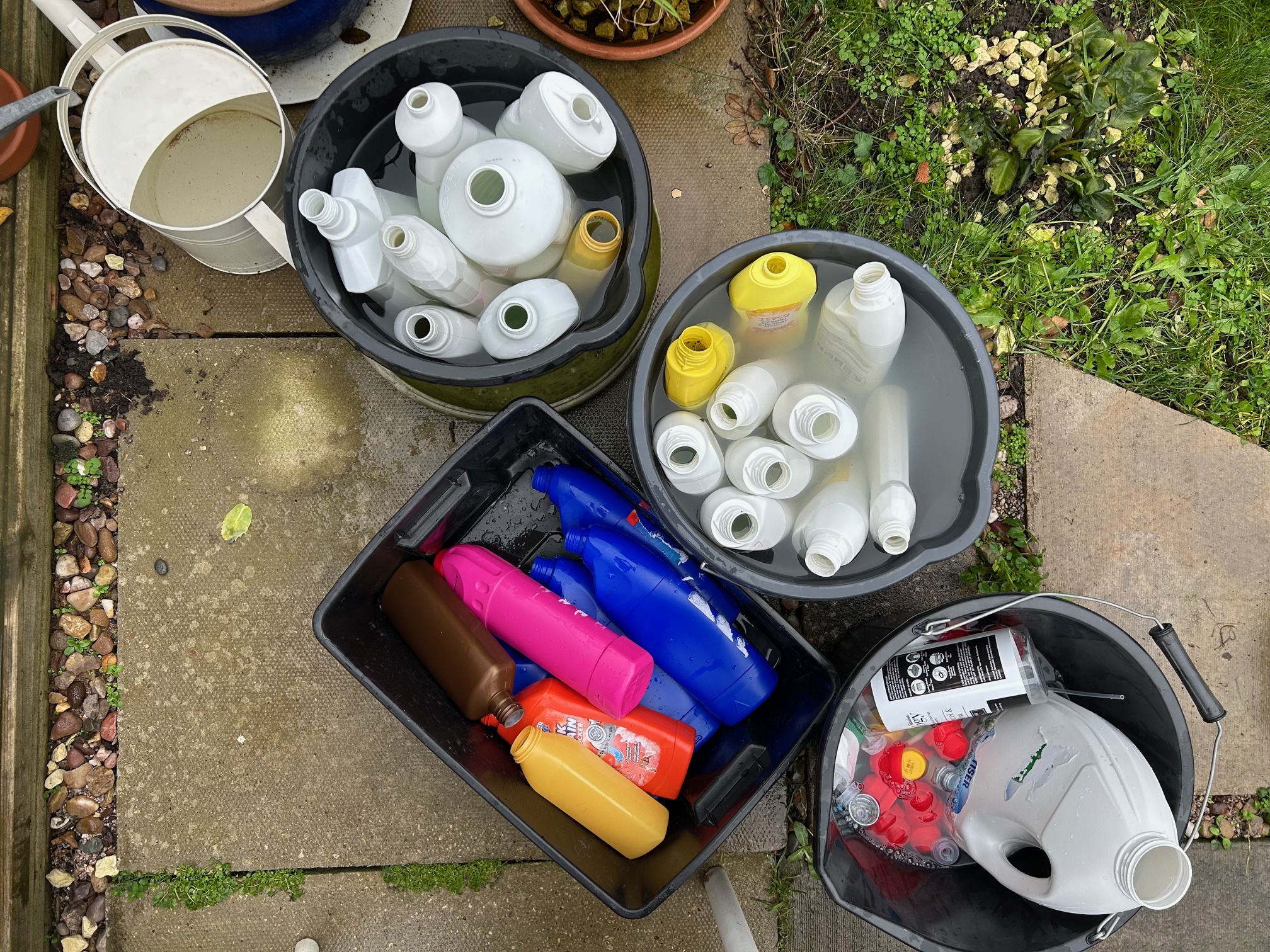
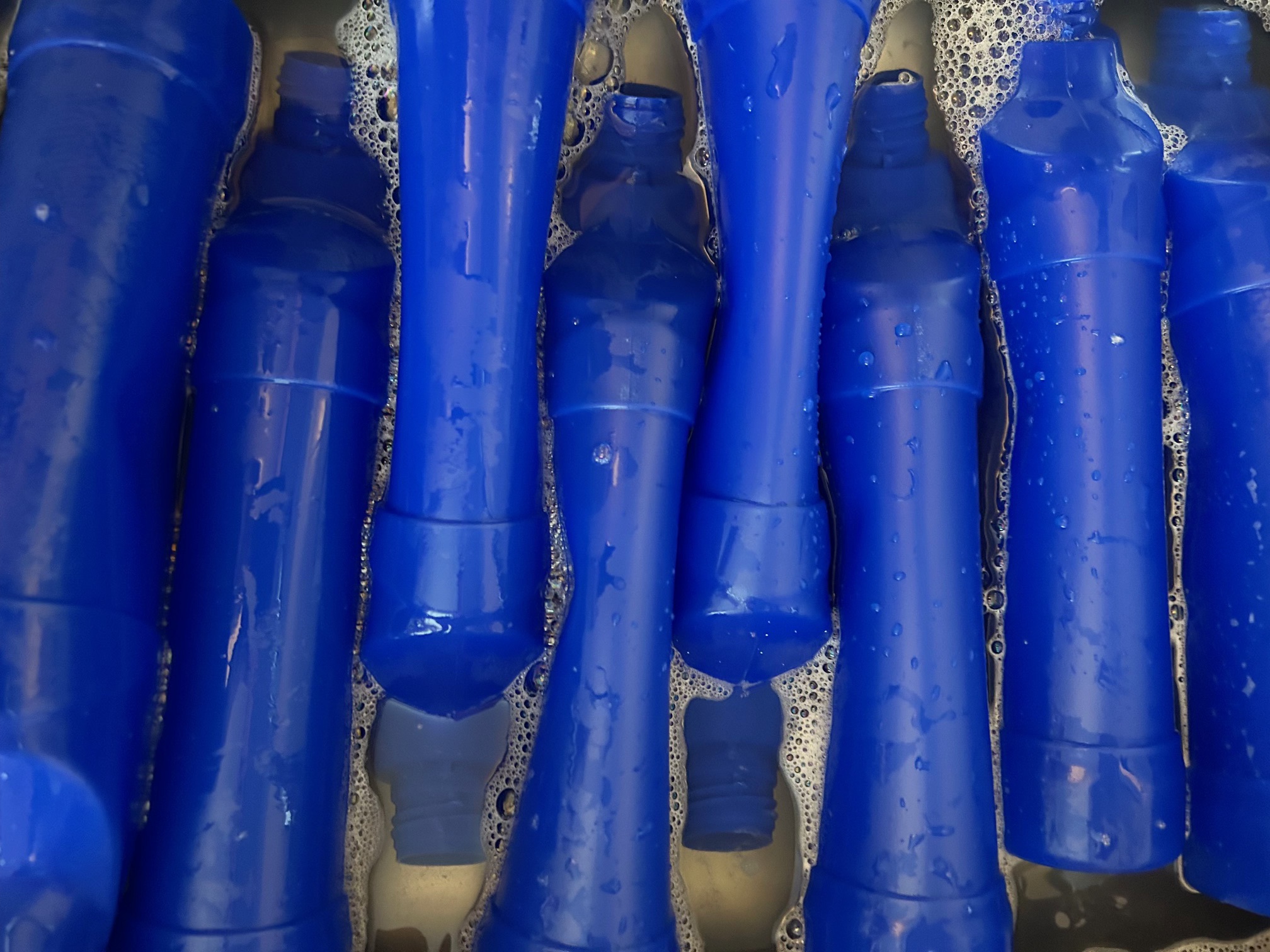
The workshop preparations are underway! See the progress of sorting and washing plastics below.
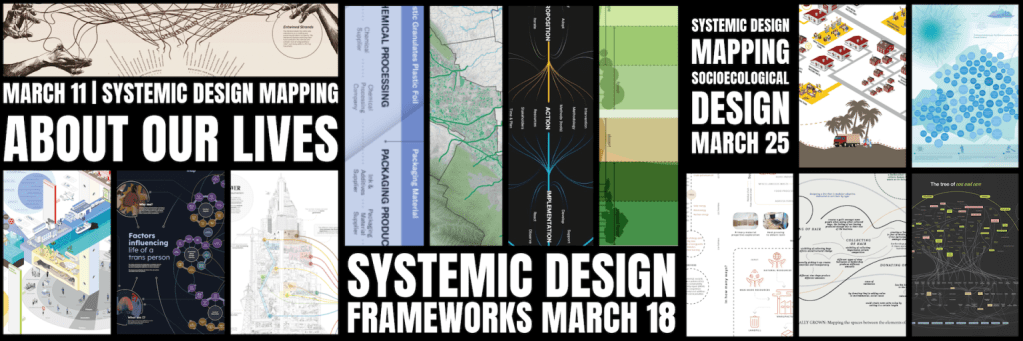
Great session pushing boundaries of mapping in #systemicdesign. Video and notes posted rsdsymposium.org/mapping-studio…. The remaining Eventbrite tickets for the mapping studios are by donation, starting at $1 (free tickets are tapped out; this is a subscription-budget limitation). You can also find the join links in the newsletters rsdsymposium.org/newsletters/
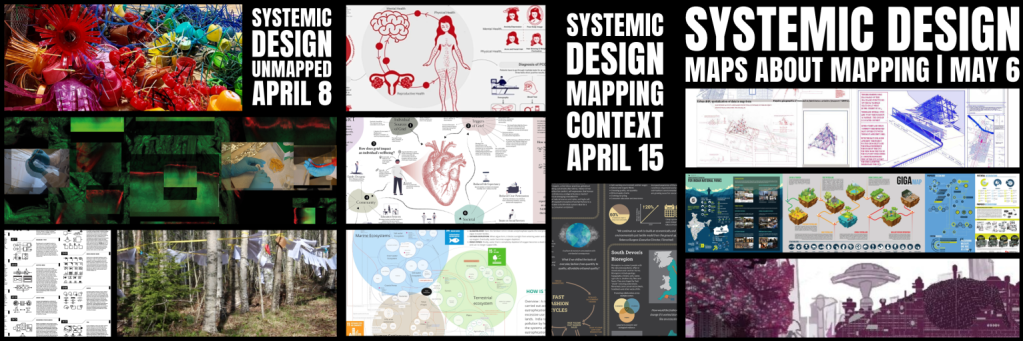
https://rsdsymposium.org/mapping-studio-unmapped/Monday, April 8—#systemicdesign is unmapped. These exhibits are a departure from the first five mapping studios. Two are presentations of site-specific installations of systems experienced from multiple points of view. The third, an experiment in art-science collaboration, resulted in richly rendered systemic representations of scientific findings. Also presented is the inventory of graphical devices and an opportunity to consider notations in multi-media mapping. Join host Tom Mairona and commenter Sally Sutherland in a discussion about unmapped methodological processes.
Systemic Design Association (RSD-12 Conference 2023)
I am excited to be on board! I am #KraalD presenting #Unmapped / #PlasticEntanglement in a unique online exhibition series connected to #mapping in a design called Mapping Mondays. There are eight sessions, starting February 26 and running to May 6. #Unmapped session is on 8 April, with my colleague Joanne Berry-Frith, 😀 commented by Sally Sutherland, but you will probably see others in the series that interest you. We hope to see you there!
In April 2017 close to 100 scholars from the social sciences and the humanities from all over the world met for the first time at Lund University to discuss waste, culture and society during the Opening the bin conference in Helsingborg. The second conference Re-open the Bin was held online in May 2021, hosted by the University of Gothenburg, Sweden and attracted over 100 participants online. Both conferences were organized by a constellation of waste researchers. It is now time to Open the Bin again.
2023, Dimitrijevic, Katarina. 2023. Visualising Plastic Ocean Pollution: Designing Waste Ontologies. Doctoral thesis, Goldsmiths, University of London [Thesis]https://research.gold.ac.uk/id/eprint/33131
Abstract
It is challenging to comprehend the extent of oceanic plastic pollution because of the sea depth and currents. This PhD by practice in design uses marine scientific findings and data on plastic waste recycling extrapolation to support an argument that the oceans are the world’s largest mismanaged landfill. As the sea’s landfill is not visible, the research applied various approaches to making invisible plastic waste present. Through Higher Education (HE) action-based workshops, research participants were invited to experience ocean plastics in ways designed to challenge perceptions. The HE action-based research co-created an aesthetically positive waste response and new experiential values that re-shaped the thinking of participants. Through a co-design approach with design students, research created meaningful connections with long-lasting plastic resources and re-imagined plastic pollution as oceanic species. This PhD thesis research comprises a series of three practice-based projects. First, HE-based waste symposium engagements facilitate landfill dialogue and promote plastic reuse. Second, HE participatory workshops enabled the visualisation of oceanic plastic pollution through making installations. Third, the research explored plastic pollution using craft expositions and participated in a sailing expedition. The PhD interventions promoted positive change through hands-on reuse tactics with plastic packaging, raising environmental and oceanic landfill awareness, and acknowledging that this may not lead to changes in stakeholders’ behaviour. Through the design agency-praxis, the research draws on recent works in speculative design formulating experiential design futures and design fictions. These PhD thesis contributions funnelled visual strategy insights from three practice-based interventions into two experiential scenarios – future-based climate fiction narratives. The first future scenario unpacked the responses of HE design workshop stakeholders and proposed informal global services and design-led packaging solutions. The second fiction scenario is a visionary post-anthropocentric future that visually re-imagined the planetary plastic pollution changes through intersections of research and praxis. This participatory research re-imagining with plastic waste and visualising the complexity of plastic pollution contributes further to knowledge relating to design research in three clustered domains. First, various HE learning tools for oceanic environmental awareness and waste reuse were developed. Second, the research designed an innovative methodology that expands praxis vocabulary and forms a new eco-centric compendium through workshop interventions and waste aesthetic approaches. Lastly, through practice-based participatory action and speculative agency, the research uniquely constructs a socio-material narrative with plastic things making new interdisciplinary connections and design relations to nature. The PhD promoted hands-on plastic reuse and new perceptions of plastic waste in HE design education, connecting to discard study, marine science and feminist thinking. A co-creation design approach raised transformative environmental awareness and promoted novel waste aesthetic and design language towards engaged relationships with plastic pollution.
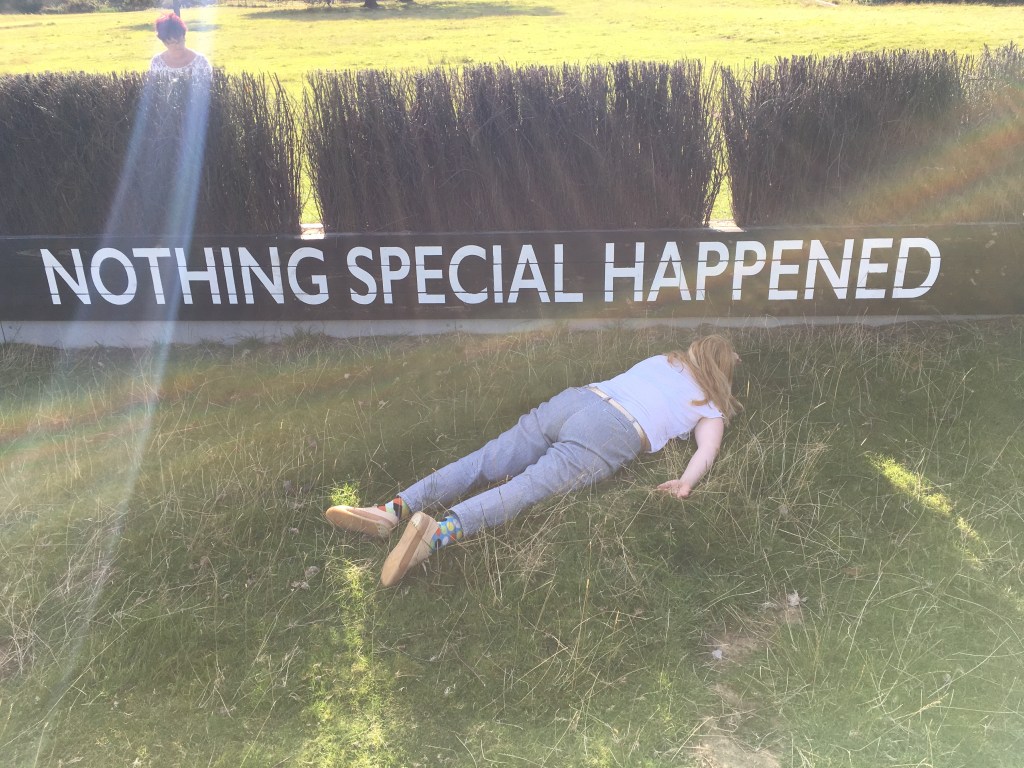
Fig. 10- 87. Nothing Special Happened, 2019.Yorkshire Sculpture Park, where I hacked Katrina Palmer installation. Photo: Rui Leitão, 2019.
Opening the Bin 3invites contributions that explore the organizing and re-organizing of waste as representative of the ‘new normal’ (Li, 2020). As events in recent years increasingly show, the world is moving deeper into a permanent state of crisis, at sanitary, social, economic and environmental levels, which confronts us with the construction of a ‘new normal’, in which waste, in all of its diversity, plays a central, inescapable role. This is not only about the fact that inherently wasteful regimes of production, consumption and discard are behind the reproduction of these interconnected crises at a global scale (Nelson, 2020). It is also about the fact that resilience-procuring agents, in organizational and governmental spheres, cannot help but generate waste in their efforts to absorb strain, repair and prevent further damages (Adyel, 2020; Sarkodie and Owusu, 2020, Zapata Campos et al., 2020). Considering such a scenario, we seek to offer a space for open, creative, transdisciplinary academic exchange around waste that is at the same time unapologetically normative; wasting ought to be debated, for it must be curbed, if our earthly society-in-crisis is to have a chance to endure.
We welcome papers that open new spaces of reflection, understanding and critique, regardless of their theoretical sources of inspiration and methodological approaches. Innovation in writing and composing style are also welcome. In addition to scholars working in organization and management studies, we welcome contributions from – inter alia – anthropology, sociology, psychosocial studies, geography, philosophy, politics, art history, communication, film, gender and cultural studies, among other fields.
Josh Lepawsky. Professor of Geography at Memorial University of Newfoundland and Labrador. He researches the geographies of discards, of maintenance, and of repair.
Trisia Farrelly. Associate Professor at Massey University, New Zealand and joined UNEP’s expert group in 2017 and currently sits on its Scientific Advisory Committee (Marine Litter and Microplastics) and the Break Free From Plastic Asia Pacific Advisory Committee and Co-Convenes its Policy Working Group.
Patrik Zapata. Professor in Public Administration at the School of Public Administration, University of Gothenburg, Sweden and isone of the many waste researchers who are not afraid to physically engage with waste. He can provide a unique insight into how ‘One World, and One Bin’ is organized.
Closing Date for Paper Submission: 16th January 2023
Papers should be submitted in electronic form (pdf) via email to OTB3@lancaster.ac.uk. Please include your contact information and affiliation.
PhD Student – please express your interest in taking part in a dedicated pre-conference waste workshop on the morning of 15th June.
Important dates:
§ 16th January 2023 – Submission of abstract
§ 6th February 2023 – Acceptance decision announced
§ 14th April 2023 – Registration Closes
§ 15th May 2023 – Sending full paper or work-in progress
§ 15th-17th June 2023 – Conference takes place at Lancaster University
Sea PET making family workshopSea PET making family workshopSea PET making family workshopSea PET making family workshopSea PET making family workshopSea PET making family workshop









 KraalD