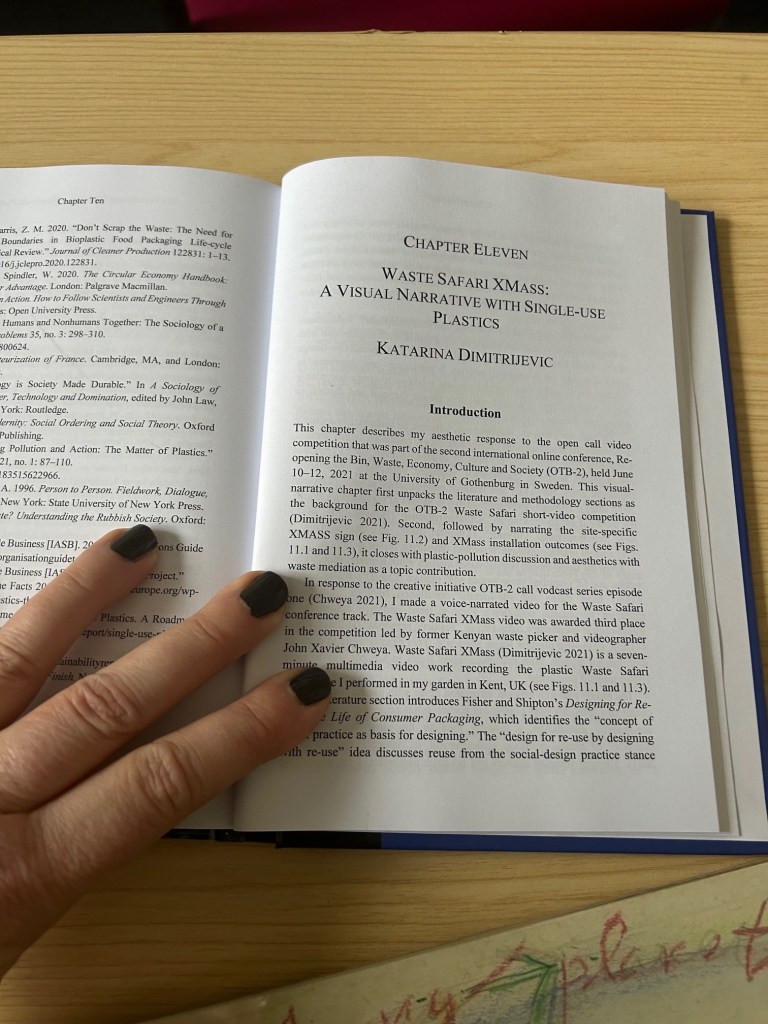
The second OTB book, Waste Research from the Social Sciences and Humanities Perspectives: Reopening the Bin, is available, to which I contributed a chapter in the Waste Practices Section, “Waste Safari XMass: A Visual Narrative with Single-use Plastics”.
This book brings together diverse international scholars who interrogate waste from a myriad of disciplines within the social sciences and humanities. These disciplines explore the many faces and dimensions of waste, adding new understandings of common and hidden waste-related problems. These insider perspectives and reflections offer innovative ways of addressing waste-related dilemmas by highlighting solutions and proposing new approaches.
I agree that we are biased with Alison Stowell, co-editor, but it is a great read. There are many exciting chapters covered in three sections: Waste Communities, Waste Policy and Governance, and Waste Practices.
I look forward to reading all the contributors’ chapters over the festive season! I thoroughly enjoyed Marta Ferrie’s Chapter Ten, “The Morality and Discipline of Single-Use Plastics.”
In collaboration with the Loughborough University @Loughborough Wellbeing Centre team, we will be offering a free DIY Christmas Decoration workshop on Monday, 9th December 2024, from 10 am to 1pm.
This workshop is open to all and will be run by Katarina Dimitrijevic from KraalD, who researches plastic pollution and promotes reuse through participatory craft-making!
Come along and make some DIY decorations for your tree. Our cafe will be open all morning, and you are welcome to join our Wellbeing Cafe, too!
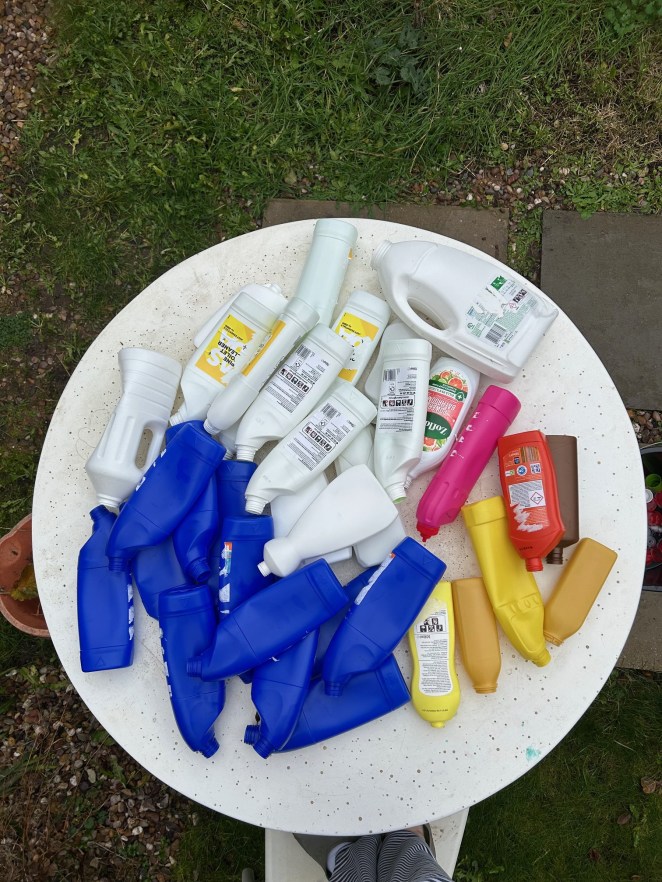
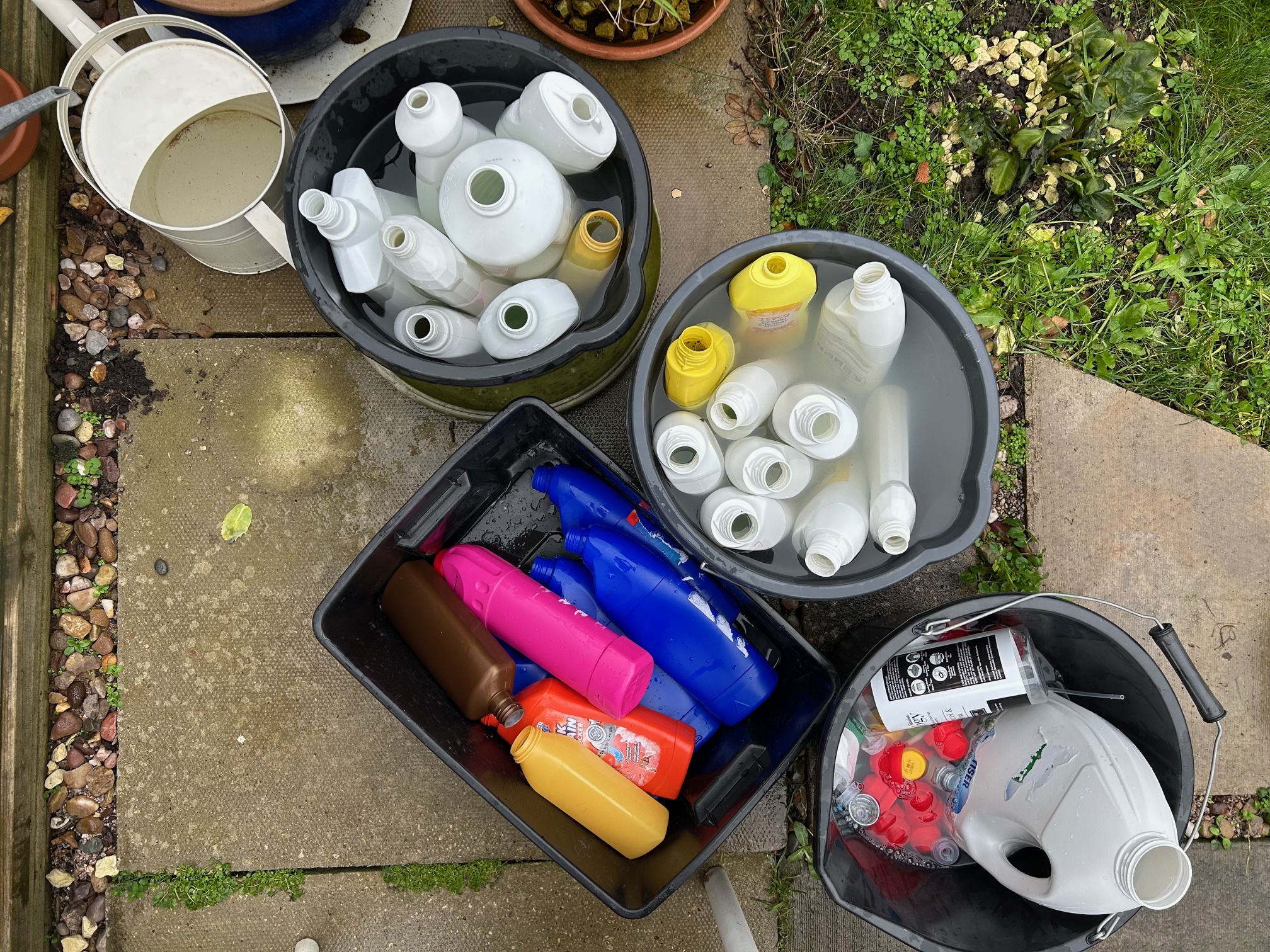
Looking forward to making DIY Christmas decorations together from post-consumer single-use plastics. All DIY materials provided are washed and sterilised.
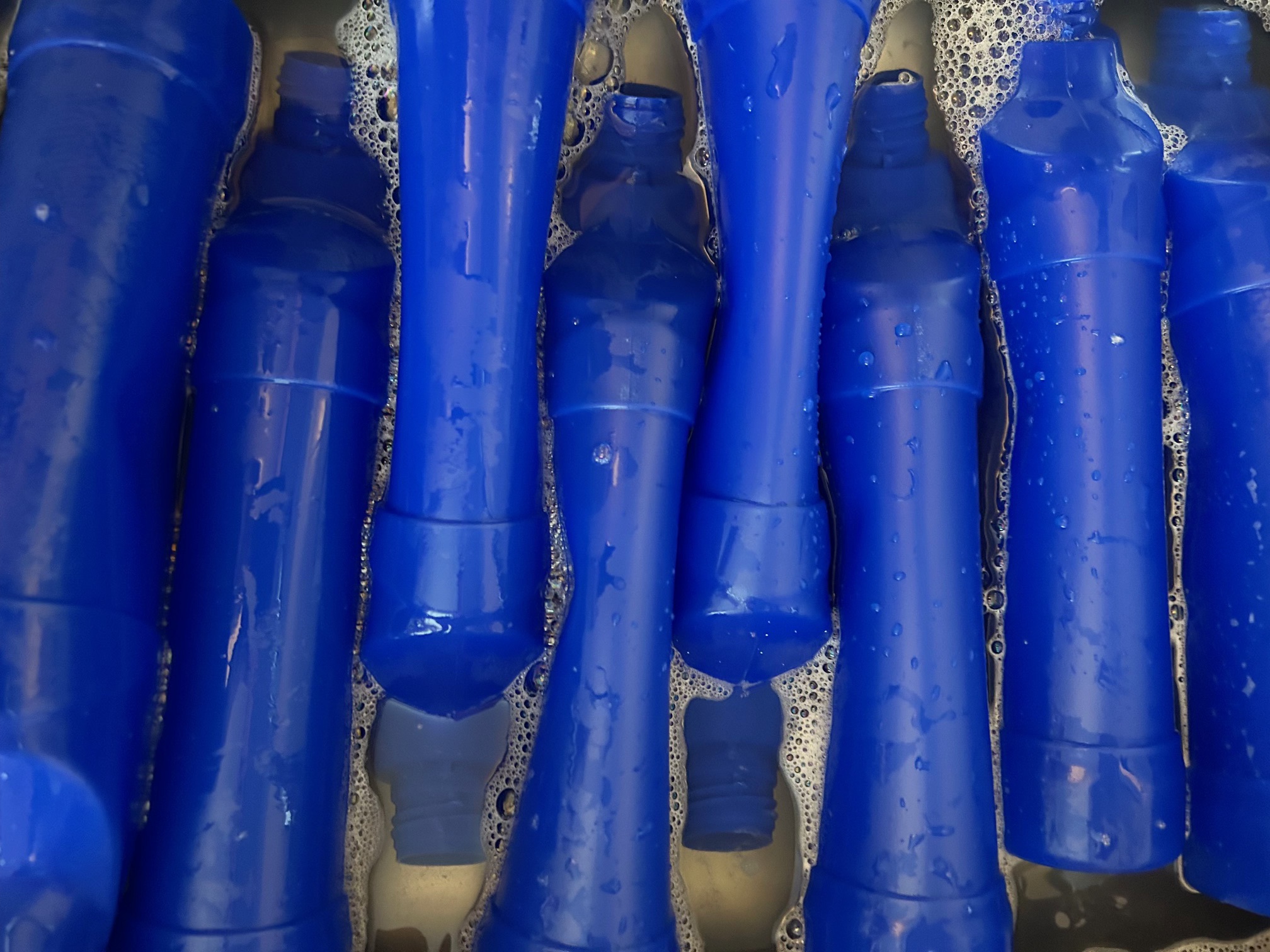
The workshop preparations are underway! See the progress of sorting and washing plastics below.
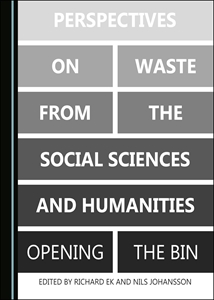
Amid the uncertainty, though I hope today to bring on board some good news, and that is that new book with Cambridge Scholars, Perspectives On Waste From The Social Sciences And Humanities: Opening The Bin edited by Richard Ek and Nils Johansson is about to be published. I am delighted to be amidst contributing authors on the topic of waste, see the table of contents below. https://www.cambridgescholars.com/perspectives-on-waste-from-the-social-sciences-and-humanities| 2020-05-01
Waste is something we encounter on an everyday basis. Today, the waste-mountain is increasing despite ambitious measures being taken to decrease it. Consequently, increased scholarly interest is being devoted to waste, but primarily from a technocratic and scientific point of view. This compilation offers different perspectives on waste, its characteristics, and its presence in the world from social scientist and humanist standpoints. Waste is the constant companion to the human, and is thus inherent in modern society.
Therefore, waste needs to be further approached and understood from a plethora of scholarly perspectives and disciplines, and further investigated through a multitude of methodologies and data collection techniques. The imagination of a future where waste-preventive actions and circular economies permeate society can only be a reality if technocratic and scientific accounts of what is to be done, when, and how, are complemented by social scientific and humanist concepts of the nature and constitution of waste. Such a perspective offers the possibility to understand how waste is constituted through relationships, language, materials, politics, practices and structures. This book shows that philosophers, historians, cultural theorists and economists have much to offer on the topic of waste as a part of everyday modern life.
TABLE OF CONTENTS
Introduction: Opening the Bin to the Social Sciences and the Humanities 3 Nils Johansson and Richard Ek
Chapter 1: Waste’s Social Order: A Historical Perspective 10 Anne Berg
Chapter 2: On Hauntology: A Turn To The Specter of Waste 24 Lisa Doeland
Chapter 3: Waste on Screen: Of Trashing, Littering and Recycling in American TV-Series 41 Fanny Verrax
Chapter 4: Mending. Female Education in Waste Prevention Over The Centuries 57 Heike Darwanz
Chapter 5: Moving Waste Around: Recycling and the Governance of Waste Management 77 Myra J. Hird and Cassandra Kuyenhoven
Chapter 6: Waste, A Matter of Energy. A Diachronic Analysis (1992-2017) of Waste-to-Energy Rationales 96 Laurence Rocher
Chapter 7: Environmental Concern in Waste Economy–A Case Study of Waste Policy In Finnish Lapland 116 Veera Kinnunen, Heikki Huilaja, Johanna Saariniemi and Jarno Valkonen
Chapter 8: Visualising the North Atlantic Gyre Patch 137 Katarina Dimitrijevic
Chapter 9: The Effect of Proximity on Waste Management within the New Vision of Circular Economy in France 161 Jean-Baptiste Bahers and Mathieu Durand
Chapter 10:Waste-in-Becoming, Value-in-Waiting: On Market Performativity and Value Propositions of Waste Electrical and Electronic Equpment (WEEE) 176 Jennie Olofsson
Chapter 11: The Ocean as Thingspace. From The Ocean As “Master of Disappearance” To The “Friendly Floatees” and a New Ocean Cosmology 198 Petra Beck
Chapter 12: Designing For An Inclusive Waste Service: Experiences from Applying Norm-Critical Design Methods in Waste Service Development 215 Lisa Andersson, Marcus Jahnke, Julia Jonasson and Rebecca Röström
Chapter 13: The Fashion Waste Management Process at ReTuna– A Study of Unstable Classifications of Textile Goods 240 Lars Hedegård and Eva Gustafsson
Chapter 14: Apple’s Recycling Robot ‘Liam’ and the Global Recycling Economy of E-Waste. What ‘The Guardian’ Does, And What He Misses Out On 265 Stefan Laser and Alison Stowell





 KraalD